Custom Wig Care Guide: Washing, Styling, and Storage for Group Orders
Custom wigs stay looking new when every wearer follows one routine: detangle first, wash only when needed with wig-safe products, air-dry on a stand, use heat only on fibers made for it and store each wig on a form. Get Custom Wigs builds every order to your spec, and this guide shows how to care for what you ordered.

- Human hair wigs need conditioning every wash; synthetic wigs keep their set style
- Standard synthetic fiber should never be heat styled
- Lace, monofilament and hand-tied caps need gentle handling at the hairline and part
- Free mockup within 24 hours, unlimited free revisions
- About 2 weeks after approval, faster with express shipping
How do you care for custom wigs so a bulk order lasts?
Custom wigs last longest when every wearer follows the same simple routine: detangle before washing, wash only when the wig needs it, air-dry on a stand, limit heat to fibers made for it, and store each wig on a form or in its own net. Get Custom Wigs builds each order to your spec, and the care routine is what protects that investment after delivery.
Care matters more for a group order than for a single personal wig. A salon shelf, a dance team or a costume department has many wigs passing through many hands, and one careless wash or hot styling tool can make a single wig look different from the rest of the set. Writing the routine down once and handing it to every wearer keeps the whole batch looking matched.
The right routine also depends on what the wig is made of and how the cap is built. A human hair wig behaves like natural hair and needs conditioning. A synthetic wig holds its factory style through washing but reacts badly to the wrong heat. Lace, monofilament and hand-tied caps each need a gentler touch at the hairline and part. The sections below break the routine down by fiber and by cap so you can match the instructions to exactly what you ordered.
How is caring for human hair wigs different from synthetic wigs?
Human hair wigs need moisture, conditioning and restyling after every wash, while synthetic wigs keep their style through washing but must be protected from heat and friction. Because a human hair wig no longer receives natural oils from a scalp, it dries out faster than hair growing on a head, so conditioner is part of every wash, not an optional extra.
Synthetic fiber is the opposite. The curl or wave is set into the fiber during manufacturing, so a synthetic wig springs back to its style after it dries. The weak points are frizz at the ends, where the fiber rubs against collars and shoulders, and damage from styling tools. Standard synthetic fiber should never touch a curling iron or flat iron. Heat-friendly synthetic wigs accept low heat styling, but they still need a heat protectant and a light hand.
| Care step | Human hair wigs | Standard synthetic wigs | Heat-friendly synthetic wigs |
|---|---|---|---|
| Shampoo | Gentle, sulfate-free shampoo | Wig shampoo made for synthetic fiber | Wig shampoo made for synthetic fiber |
| Conditioning | Every wash, plus occasional deep conditioning | Light fiber conditioner or detangling spray | Light fiber conditioner or detangling spray |
| Heat styling | Yes, with heat protectant | No | Low heat only, with heat protectant |
| Style after washing | Must be restyled | Returns to factory style | Returns to set style unless restyled |
| Biggest risk | Dryness and tangling | Frizz and heat damage | Too much heat, too often |
How often should custom wigs be washed?
Wash custom wigs based on how they are worn, not on a fixed calendar. A wig worn daily by one person needs washing when it starts to feel heavy, look dull or hold odor. A performance wig that meets sweat, hairspray and stage makeup needs washing sooner. A display wig on a salon shelf rarely needs a full wash at all, only a gentle brush and dust check.
Overwashing is one of the fastest ways to age a wig. Every wash loosens knots at the cap, dries human hair and adds friction to synthetic fiber. Between washes, a light detangling spray and a wide-tooth comb keep most wigs looking fresh. If a group shares a wig wardrobe, such as a theater company or dance studio, keep a simple log so the same wig is not washed after every single wear while another is ignored.
When you place a group order, it helps to tell Get Custom Wigs how the wigs will be worn. Daily wear, weekend performances and retail display call for different fiber and cap recommendations, and choosing the right construction up front reduces how much care each wig needs later.
What is the right way to wash and dry a custom wig?
The right way to wash a custom wig is to detangle it dry, soak it gently in cool water with wig-safe shampoo, rinse in the direction the hair falls, condition, blot with a towel and air-dry on a wig stand. Never rub, wring or twist the hair, and never wash a wig under a running tap that forces water against the cap.
- Detangle first. Start at the ends with a wide-tooth comb and work up toward the cap. Washing a tangled wig locks knots in.
- Soak, do not scrub. Fill a basin with cool water and a small amount of shampoo, submerge the wig and swish it gently.
- Rinse downward. Rinse with clean cool water, following the direction of the hair so the strands stay aligned.
- Condition the hair, not the knots. Apply conditioner from mid-length to ends and keep it off the lace or knots, which can loosen with heavy product.
- Blot and air-dry. Press out water with a towel and let the wig dry on a stand or form, away from direct heat and sun.
Curly and coily textures need an extra step: finger-detangle while conditioner is in, then let the curl pattern dry undisturbed. Brushing a curly wig dry pulls the curls apart and leaves it puffy.
How do you protect lace fronts, monofilament tops and hand-tied caps?
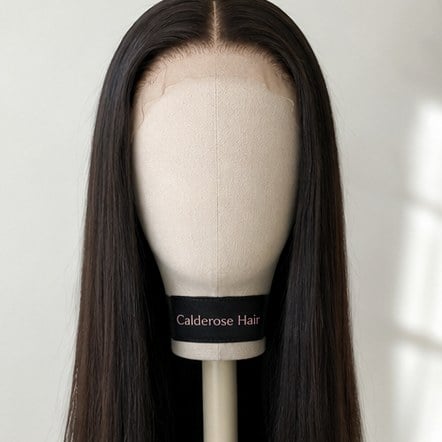
Delicate caps need the most protection at the hairline and part, where the hair is knotted into fine lace or mesh. On lace front wigs, full lace wigs, monofilament top wigs and hand-tied custom wigs, gentle handling at these areas is what keeps the natural look you paid for.
- Lace edges. Remove any adhesive with a remover made for wigs, never by peeling. Clean residue off the lace before washing so it does not harden.
- Bleached knots. Keep heavy conditioner and harsh shampoo off the knots, since they can loosen over time and lead to shedding.
- Monofilament parts. Comb away from the part line rather than scraping across the mesh, and avoid pressing a hot tool directly on the top.
- Hand-tied caps. Support the cap with one hand while combing with the other, so the comb pulls on the hair instead of the knots.
If you are ordering these constructions for a group, plan who will handle the wigs. A trained wig handler or stylist protects delicate caps far better than a rotating cast of wearers, so many costume departments and salons assign one person to wash and set every wig in the order.
How should custom wigs be stored between wears?
Store custom wigs on a wig stand, foam head or in a hair net inside a breathable bag, away from sunlight, heat and humidity. Long wigs should be loosely braided or wrapped before storage so the ends do not tangle, and curly wigs should be stored with room for the curls rather than crushed flat in a box.
For group orders, storage is also an organization problem. Label each stand, net or bag with the wearer, the look and the construction so wigs do not get swapped between people with different cap sizes. Keep different looks separated, especially when several wigs are close in color, so a stylist can grab the right one quickly. If wigs are shared across seasons or productions, store a clean, fully dry wig only, since damp storage leads to odor and matting.
Retail stock needs one more step. Private-label wigs sold in a salon should stay in their packaging until purchase, with one display wig on a form for shoppers to touch. If you are planning a private-label wig line, Get Custom Wigs can mock up the look before production, and you can write care instructions for shoppers that match the exact fiber and cap you ordered.
What care mistakes shorten the life of a custom wig?
The most common care mistakes are using hot tools on standard synthetic fiber, brushing wet hair from the root down, sleeping in a wig, washing too often and storing a wig while it is still damp. Each of these damages a custom wig faster than ordinary wear, and most are easy to prevent with clear written instructions.
- Wrong products. Regular shampoos with strong detergents dry human hair and can dull synthetic fiber. Wig-specific products are gentler.
- Friction. Collars, scarves, seat backs and pillows rub the ends of long wigs and cause frizz. A silk or satin scarf helps when a wearer is resting.
- Heat near synthetic fiber. Oven doors, stage lights at close range and hair dryers on high can frizz synthetic fiber permanently.
- Too much product. Heavy sprays and gels build up and attract dirt, which then forces more frequent washing.
- No care plan. Handing a group of wigs to wearers with no instructions guarantees that some will be treated differently from others.
Where can you order custom wigs built for easy care?
You can order custom wigs built around how they will be worn and cared for through Get Custom Wigs. Tell the team who the wearers are, how often the wigs will be worn, whether heat styling is needed and who will maintain them, and the recommendation will match the fiber and cap to that routine.
Every order starts with a free mockup within 24 hours, unlimited free revisions and nothing to pay until you approve the design. Standard production takes about 2 weeks after approval, with faster turnaround available with express shipping. To start, send your look, quantities and care needs through the custom quote form, or read how it works to see each step from mockup to delivery.
Frequently asked questions
What heat tools are safe to use on heat-friendly synthetic custom wigs?
Heat-friendly synthetic custom wigs can be styled with curling irons, flat irons and blow dryers set to a low heat setting, always with a heat protectant. Keep the tool moving and avoid holding it in one spot. Standard synthetic wigs should never be heat styled at all, so confirm which fiber you ordered before anyone reaches for a hot tool.
Should custom wigs be washed with regular shampoo?
Custom wigs last longer when washed with a gentle, wig-safe shampoo rather than a regular drugstore formula. Strong detergents strip moisture from human hair and can leave synthetic fiber dull or rough. Human hair wigs do well with sulfate-free shampoo and conditioner, while synthetic wigs need products labeled for synthetic fiber. A small amount of product is enough for each wash.
How should custom wigs be dried after washing?
Custom wigs should be blotted gently with a towel and then air-dried on a wig stand or foam head, away from direct sun and heat. Wringing or rubbing tangles the hair and stresses the cap. Human hair wigs can be finished with a blow dryer once mostly dry, but standard synthetic wigs should always dry naturally to protect the fiber.
Can a salon give shoppers care instructions with private-label wigs?
Private-label wigs sell better when each shopper leaves with clear care instructions that match the fiber and cap they bought. Get Custom Wigs builds private-label orders to your spec, so you know exactly what each style is made of and can write instructions for washing, heat use and storage. Many salons pair the instructions with a care product kit at checkout.
What causes the ends of synthetic wigs to frizz?
Synthetic wigs usually frizz at the ends because of friction and heat. Long synthetic fiber rubs against collars, shoulders, seat backs and pillows, which roughens the tips over time. Heat from styling tools, ovens or hair dryers can also melt or kink standard fiber. Choosing heat-friendly fiber, using a silk scarf and trimming damaged ends keeps the wig looking fresh longer.
Can human hair custom wigs be colored again after delivery?
Human hair custom wigs can be recolored by an experienced colorist, but each chemical treatment adds dryness, so deep conditioning afterward is important. Darkening is usually gentler than lightening. If you already know the final shade, it is better to request it in the original order. Get Custom Wigs shows the color in a free mockup within 24 hours before production.
How do you detangle a curly custom wig without losing the curl pattern?
Curly custom wigs should be detangled with fingers or a wide-tooth comb while the hair is wet and coated with conditioner, starting at the ends and working toward the cap. Dry brushing separates the curls and leaves the wig puffy. After rinsing, let the curls dry on a stand without touching them, then refresh with a light spray between wears.
What supplies belong in a care kit for a group wig order?
Wigs ordered for a team, cast or staff stay consistent when one shared care kit travels with them. A basic kit includes wig stands or foam heads, a wide-tooth comb, wig-safe shampoo and conditioner, detangling spray, hair nets, storage bags, adhesive remover for lace wigs and labels. Get Custom Wigs can tell you which items fit the fiber and caps you ordered.
How do you clean adhesive residue off the lace of a custom wig?
Lace front and full lace custom wigs should have adhesive removed with a remover made for wigs, applied along the lace and left briefly so the bond softens. Lift the lace slowly instead of peeling, then wipe residue away with a soft brush or cotton pad. Clean the lace before washing the hair so leftover glue does not harden in the mesh.
Why does a human hair wig feel dry after several washes?
Human hair wigs feel dry after repeated washing because the hair no longer receives natural oils from a scalp. Each wash removes moisture that is never replaced unless you add it. Conditioning after every wash, an occasional deep treatment and less frequent washing restore softness. Get Custom Wigs recommends asking about hair grade when ordering wigs that will be washed often.
Can sweat damage custom wigs worn for performances?
Custom wigs worn under stage lights or during dance routines absorb sweat, which can build up in the cap, loosen knots and leave odor. A wig cap underneath absorbs much of the moisture, and airing the wig on a stand after each wear helps it dry fully. Performance wigs need washing more often than display wigs, so plan care time into the schedule.
Should each wearer in a group order keep their own custom wig?
Custom wigs in a group order are best assigned to one wearer each, labeled by name, look and cap size. Assigned wigs stay sized correctly, keep a consistent shape and are more hygienic than wigs passed between people. When you request a quote from Get Custom Wigs, include a name list so each wig can be tracked from mockup through delivery.
Get a free mockup for your wigs
Send your logo or idea and the quantity you have in mind. Get Custom Wigs returns a free mockup within 24 hours, you approve the design before anything is produced, and standard turnaround is about two weeks with faster options available. Get a custom quote.