Length is the specification that buyers get wrong more than any other, and not because they cannot count. The problem is that the number printed on a wig is not the length you see in the mirror. A unit labeled twenty inches in a tight curl can sit several inches higher on the body than a twenty-inch straight unit, and a first-time buyer feels shortchanged when, in fact, nothing is wrong. Understanding how length is measured, where it lands, and why texture changes the answer is the difference between ordering the wig you pictured and ordering a disappointment.
How wig length is actually measured
Length is measured from the crown, near the top of the cap, straight down to the ends, with the hair pulled taut. That last detail is the crux of the confusion. For a straight wig, the measured length and the length you wear are effectively the same. For anything with wave or curl, the manufacturer straightens the hair to take the measurement, so the labeled number describes the hair stretched out, not the way it will actually hang once the curl springs back. The measurement is honest; it simply is not the same as the visible drop, and nobody tells the buyer that up front.
Where each length lands
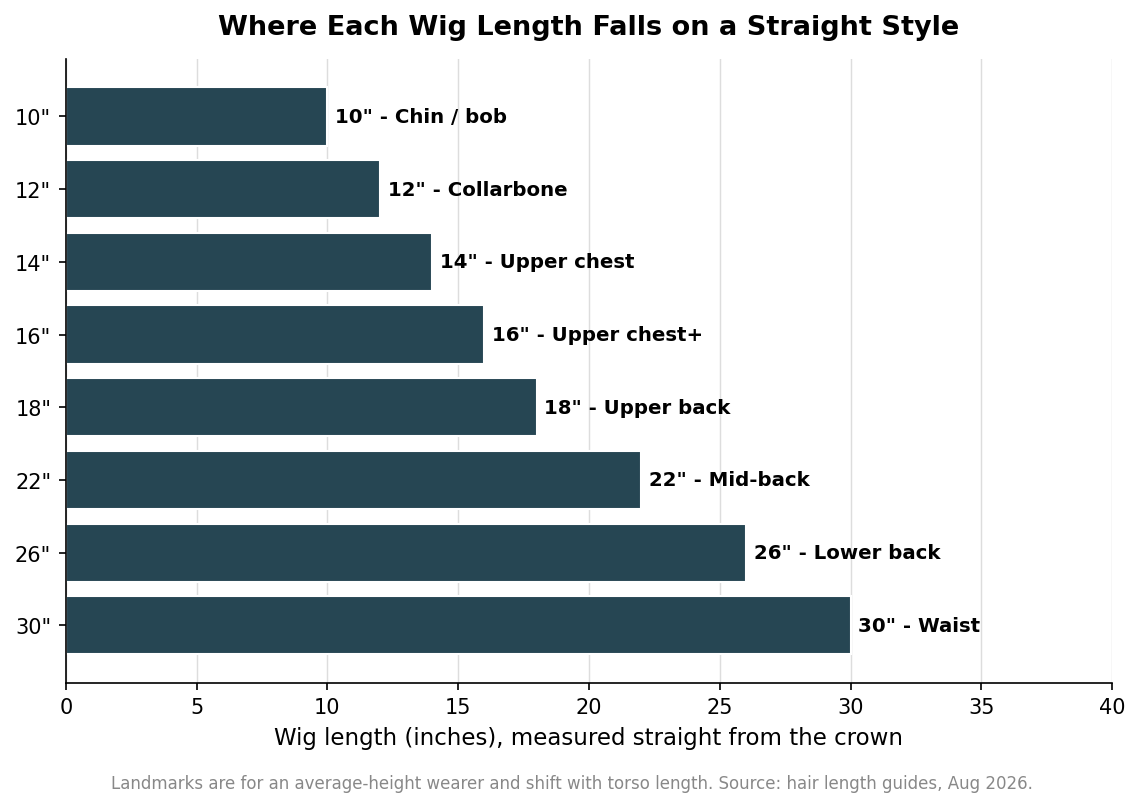
On an average-height wearer with straight hair, the common lengths map to the body in a fairly consistent way. Around ten inches you get a chin-length bob. Twelve inches reaches the collarbone, fourteen to sixteen covers the upper chest, and eighteen inches, one of the most-ordered lengths, sits across the upper back. Twenty to twenty-two inches is the popular mid-back drop and is roughly the average length people picture as long hair. Twenty-four to twenty-six inches reaches the lower back, and twenty-eight to thirty inches falls to the waist. These are landmarks, not guarantees: a taller wearer or a longer torso shifts every one of them upward, so treat the chart as a starting reference and adjust for the actual person.
Why texture makes hair "shrink"
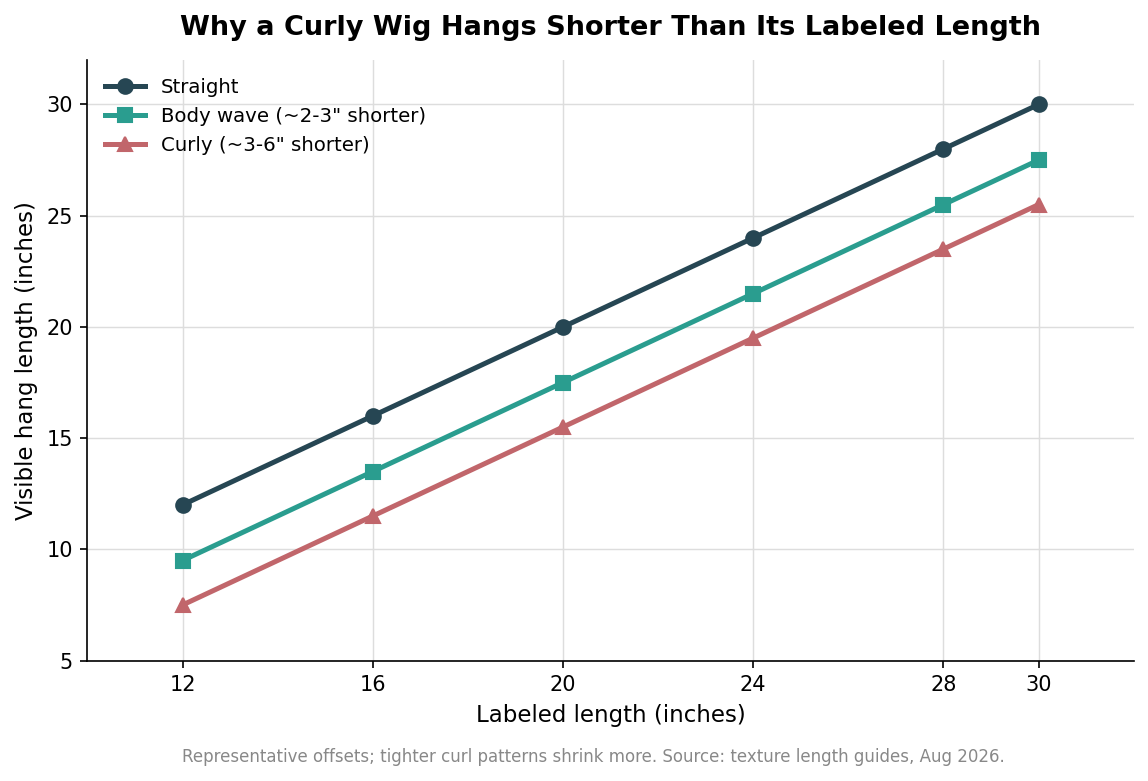
Here is the part that generates the most returns. Because curl and wave coil the hair, a textured wig hangs noticeably shorter than a straight one of the identical labeled length. As a working rule, body wave falls roughly two to three inches shorter than straight, and curly falls roughly three to six inches shorter, with the tightest curl patterns losing the most. A twenty-inch straight unit lands at mid-back, but a twenty-inch tight-curl unit can read closer to the upper chest. This is not shrinkage in the fabric sense and it is not a defect; it is geometry. The practical response is simple: if you are buying a curly or wavy texture, size up. Order two to four inches longer than the straight length you actually want to see, and match the amount to how tight the curl is.
Length, density, and price move together
Length does not travel alone on a spec sheet. Longer hair needs enough density to carry it, because a long wig built at a light density thins visibly toward the ends and reads as stringy; as you add length you generally need to hold or raise density to keep the shape full. That combination has direct consequences for cost and weight. More inches and more density mean more hair, which raises the price and makes the finished unit heavier on the head, something worth weighing for pieces meant to be worn all day. For a bulk or reseller order, the useful move is to standardize on a small number of hero lengths rather than offering every inch. A tight range keeps your grading consistent, simplifies restocking, and covers the vast majority of demand, which clusters in the eighteen-to-twenty-two-inch band.
Specifying length without a surprise
Three habits prevent the length mistakes that lead to returns. First, specify texture and length together, and state where you want the hair to fall on the body, not just the inch count, so the maker can account for curl shrink on your behalf. Second, confirm the measurement method, that the length is taken from the crown with the hair pulled straight, so you and the supplier are describing the same thing. Third, on a first order with a new maker, ask for a length reference, a photo on a known-height model or a physical strand, before committing to a full run. None of this is difficult, and all of it is cheaper than a batch of wigs that measured exactly to spec and still landed inches from what the customer expected. Length is a number that only means something once you know how it was taken and what the texture will do to it.