Custom Wigs for Theater Productions: A Costume Department Playbook
Theater costume departments can order matching custom wigs for a whole cast from Get Custom Wigs, starting at 12 pieces. Choose lace front or full lace for principals, heat-friendly synthetic wigs for the ensemble, brief every role on one chart, approve a free mockup within 24 hours and plan around a standard turnaround of about 2 weeks.

- Minimum order is 12 wigs, and one order can mix roles and looks
- Free mockup within 24 hours, unlimited free revisions
- Standard turnaround about 2 weeks after approval; express shipping available
- Pay nothing until you approve the design
Where can a theater costume department order matching wigs in bulk?
A theater costume department can order matching wigs in bulk from Get Custom Wigs, starting at a minimum of 12 pieces per order. You describe the show, the characters and the looks, and the team returns a free mockup within 24 hours so the designer can approve color, length and construction before anything is made.
Bulk ordering matters most for productions where several performers share one look: a chorus of identical bobs, a line of matching period updos, or a family of characters who need the same shade. Buying one wig at a time from different retail sources almost guarantees slight color and texture mismatches under stage light. One coordinated order keeps the whole ensemble consistent.
The same order can still mix looks. A single run can include a set of matching chorus wigs plus a handful of principal wigs in different lengths or textures, as long as each style is specified clearly on the brief.
Which wig construction works best under stage lighting?
Lace front wigs are the usual choice for stage work because the sheer lace at the hairline disappears under makeup and lighting, letting performers wear the hairline swept back. Full lace wigs add freedom to part and style anywhere, which suits principals whose wigs are restyled between scenes or seen up close in smaller houses.
| Construction | Best stage use | Trade-off |
|---|---|---|
| Lace front | Principals and chorus with visible hairlines | Parting is limited toward the back |
| Full lace | Updos, period styles, close audiences | More delicate to handle between shows |
| Monofilament top | Natural-looking parts on modern characters | Hairline still needs styling care |
| Standard cap | Back-row chorus, quick-change roles | Hairline reads as a wig up close |
Many departments mix constructions within one order: lace front or full lace for leads, simpler caps for performers far from the audience. That balance keeps the look convincing where it counts.
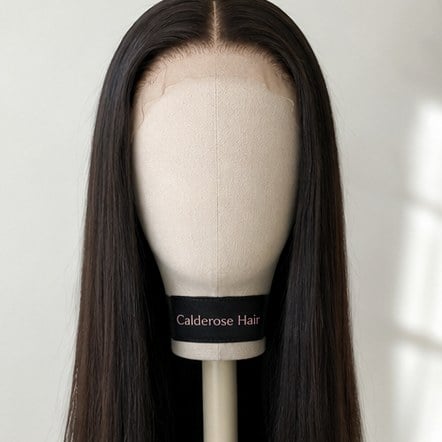
Should stage wigs be human hair or heat-friendly synthetic?
For most stage productions, heat-friendly synthetic wigs are the practical choice for the ensemble, while human hair wigs are worth it for leads whose styles change during the run. Heat-friendly synthetic fiber accepts low-heat styling, holds a set style well across repeated performances and keeps a uniform color from wig to wig.
Human hair wigs behave like real hair: they can be washed, recolored, curled and restyled many times, which makes them the better long-term investment for a principal character or a wig stock that will be reused across seasons. They also need more maintenance between shows, so wig crews should plan for that time.
- Chorus and ensemble: heat-friendly synthetic for matching color and style hold.
- Principals with scene changes: human hair for restyling flexibility.
- Rental or repertory stock: human hair where the wig must serve several productions.
How do you brief a wig order for an entire cast?
The clearest way to brief a cast wig order is a simple chart with one row per wig: character, performer head measurements, construction, hair type, color, length, texture and final style. Get Custom Wigs uses that chart to build the mockup and confirm every line before production.
- Collect head measurements for every performer early in rehearsals, including circumference and front-to-nape length.
- Group identical looks so matching wigs are specified once and quantified, which keeps them consistent.
- Attach references such as rendering sketches, period photos or color swatches for each look.
- Note the styling plan so the wig arrives with the right length and density to be cut and set by your wig crew.
- Flag understudies and swings who need their own wig in the same look.
A complete brief removes guesswork, which is what keeps a chorus of twelve looking like one design rather than twelve separate purchases.
How far ahead should a production order its wigs?
A production should place its wig order as soon as casting and designs are locked, because standard turnaround at Get Custom Wigs is about 2 weeks after design approval, and the wig crew still needs time to cut, set and fit each piece before technical rehearsals. Faster turnaround is available with express shipping when the calendar is tight.
Work backward from first dress rehearsal. Leave time for performers to wear the wigs in rehearsal, for the crew to adjust fit, and for any recasting. The free mockup arrives within 24 hours of your brief, and revisions are unlimited and free, so the approval step moves as fast as the design team can respond.
Nothing is paid until you approve the design, which means a department can start the brief while designs are still being finalized and confirm once the director signs off.
What should a costume department check before approving the mockup?
Before approving a wig mockup, a costume department should confirm color under the show’s lighting plan, the length needed for the final style, the hairline construction for each role and that every performer’s cap size is listed. These four checks catch most of the problems that surface at dress rehearsal.
- Color: compare the swatch against costume fabrics and makeup, not just the rendering.
- Length: order extra length for styles that will be cut or set on the block; trimming is easy, adding length is not.
- Density: heavier density reads fuller from the back row, lighter density looks more natural up close.
- Cap fit: double-check measurements for performers who also wear mics, hats or headpieces under or over the wig.
- Quantities: include understudy and swing wigs so every cover has a matching look.
Asking for a revision costs nothing, so it pays to raise every concern at the mockup stage rather than after the wigs arrive.
How should stage wigs be cared for across a long run?
Stage wigs last longest when each one lives on its own labeled block between performances, is brushed out gently after every show and is washed on a regular schedule set by the wig supervisor. Labeling every block with character and performer prevents mix-ups between matching ensemble wigs.
Heat-friendly synthetic wigs should be styled with low heat only and stored away from hot dressing-room lights. Human hair wigs can be reset more aggressively but need conditioning to stay soft through a long run. Lace fronts deserve particular care: clean adhesive off the lace gently and avoid stretching the hairline.
When a production closes, clean and store reusable wigs in breathable covers. A well-kept wig stock becomes an asset for future seasons, which is one reason many departments reorder through the same source so new pieces match what is already on the shelf.
Frequently asked questions
Can a costume shop order wigs for only part of a cast?
Wigs from Get Custom Wigs can be ordered for any part of a cast, as long as the order reaches the minimum of 12 pieces. Many costume shops order matching chorus wigs together and add a few principal looks to the same run. Each line on the brief can have its own construction, color and length, so mixing roles in one order is straightforward.
Do matching ensemble wigs come out the same color?
Ensemble wigs ordered together in one run are made to a single approved color, which is why bulk ordering is the best way to keep a chorus consistent. Get Custom Wigs confirms the shade on the free mockup before production. Buying wigs separately from different sources is the most common cause of visible color differences under stage lights.
Can stage wigs be cut and styled by our own wig crew?
Stage wigs from Get Custom Wigs arrive ready for your wig crew to cut, set and dress to the designer's vision. Ordering a little extra length gives the crew room to shape the final style. Heat-friendly synthetic pieces accept low-heat tools, while human hair pieces can be cut, curled and recolored much like natural hair.
Which wigs suit fast quick-changes backstage?
Wigs with simpler cap construction usually suit fast quick-changes, because they go on and come off without detailed hairline work. Lace front and full lace pieces look more natural but take longer to secure. Many productions specify a simpler cap for quick-change roles and reserve lace constructions for principals who stay in one look for longer stretches.
Are lace front wigs worth it for chorus members?
Lace front wigs are worth it for chorus members who perform close to the audience or wear their hair swept back from the face. For performers far upstage, a simpler construction often reads just as well from the house. Get Custom Wigs can mix both in one order so the budget goes where the audience will notice.
Can understudies get the same wig as the principal?
Understudy wigs can be made in the same color, length and style as the principal's, sized to the understudy's own head measurements. Listing understudies and swings on the original brief is the easiest approach, because their wigs are produced in the same run. Get Custom Wigs then confirms every matching line on the mockup.
What references help when ordering period-style wigs?
Period-style wigs come out best when the brief includes the costume designer's renderings, historical photos of the target style and a color swatch. Get Custom Wigs uses those references to set length, texture and density so the crew can dress the wigs into authentic shapes. Noting whether the style is an updo or worn down also helps.
Can a school drama program order custom wigs?
School drama programs can order custom wigs through Get Custom Wigs with the same minimum of 12 pieces as any other buyer. Musicals with large ensembles often reach that number quickly. A heat-friendly synthetic stock is a popular choice for schools because the wigs hold their style well and can be restyled for future productions.
How should wig colors be chosen for stage lighting?
Wig colors for the stage should be chosen with the lighting designer, because colored washes can shift how a shade reads from the house. Testing a swatch under the actual rig is ideal. Slightly richer or deeper tones often read more clearly from a distance, and the mockup from Get Custom Wigs is the point to confirm that choice.
Can wigs be reused for a later production?
Wigs can absolutely be reused for later productions when they are cleaned, conditioned and stored on blocks or in breathable covers. Human hair wigs are the most flexible for reuse because they can be recolored and restyled. Building a wig stock through one supplier also makes it easier to add matching pieces later.
What happens if a performer is recast after the wig order?
When a performer is recast after a wig order, the existing wig may still fit if head measurements are close, and your wig crew can often adjust the cap. If the new performer needs a different size, a replacement can be ordered. Get Custom Wigs can repeat the approved specification so the new piece matches the rest of the cast.
Get a free mockup for your wigs
Send your logo or idea and the quantity you have in mind. Get Custom Wigs returns a free mockup within 24 hours, you approve the design before anything is produced, and standard turnaround is about two weeks with faster options available. Get a custom quote.