A custom wig is a set of specifications before it is a product. Two wigs described as “long wavy human hair” can fit, part, and age completely differently depending on cap size, construction, and density. If you are ordering a custom or made-to-measure wig, the quality of what you receive tracks closely with the quality of the brief you give. Here is how to specify each decision in the order that matters.
Start with measurements, not style
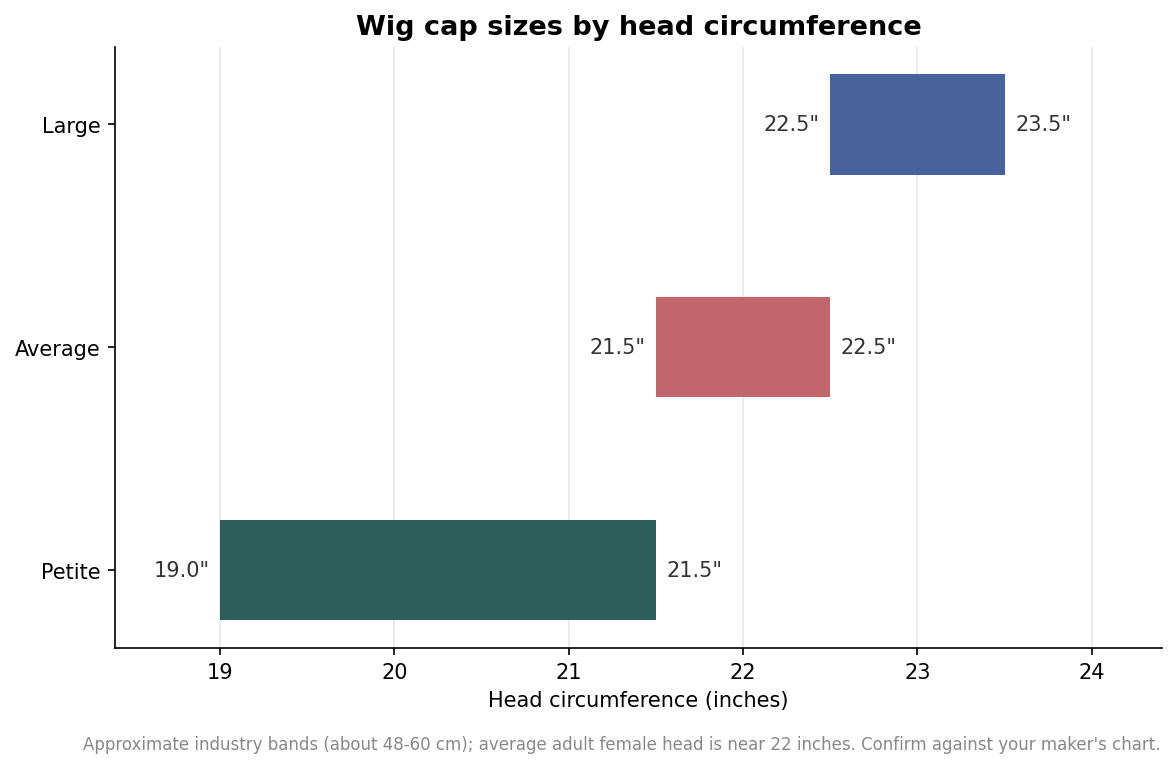
Fit is the specification that a beautiful wig cannot recover from, so take it first. The single most important number is head circumference, measured with a soft tape around the hairline, above the ears, and around the nape. Most adult heads fall into three bands: petite at roughly 19 to 21.5 inches, average at about 21.5 to 22.5 inches, and large at 22.5 inches and up. An average adult female head sits near 22 inches, which is why most stock wigs are cut to that size.
For a genuinely custom cap, one measurement is not enough. Makers typically ask for seven: full circumference, front hairline to nape, ear to ear across the top, temple to temple around the back, the nape width, ear to ear across the forehead, and the temple-to-temple hairline. Recording all seven lets the maker build a cap that follows your head rather than approximating it, and it is the difference between a wig that sits flat and one that lifts at the nape or slides forward. Take each measurement twice and write down both.
Choose the cap construction
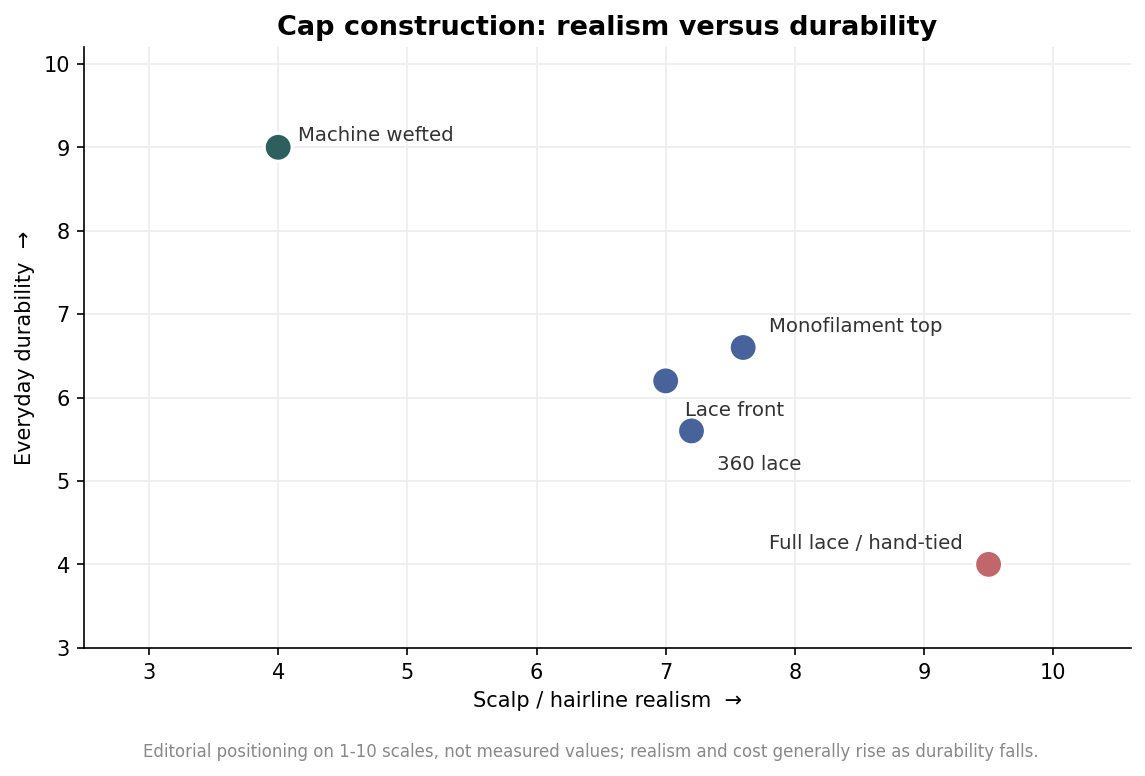
The cap is the foundation, and it sets realism, comfort, styling freedom, and price all at once. Machine-wefted caps stitch rows of hair wefts onto an elastic base. They are the most affordable and the most durable, they breathe well, and they hide their construction under the hair, but they offer the least scalp realism and no natural part. Lace front caps hand-tie hair to a fine mesh strip, usually one-eighth of an inch to about an inch and a half deep, along the front hairline, so the hair appears to grow from the skin and can be styled off the face. Monofilament tops hand-tie hair to a sheer mesh crown, creating a natural-looking part that can move in any direction and sitting gently against sensitive scalps.
Beyond those, a 360 lace cap runs lace around the entire perimeter with wefts through the center, which supports high ponytails and updos, while a full lace or fully hand-tied cap ties every hair individually across the whole cap. Full lace is the most natural and the most versatile to style, and it is also the most expensive and the least hardy; a single hand-tied wig can take around three days to make. As the positioning map below shows, realism and durability generally pull in opposite directions, so the honest question is how much daily robustness you are willing to trade for an invisible hairline and free parting.
Set the density
Density describes how much hair is attached to the cap relative to a full natural head, and it is one of the most common sources of disappointment when left unspecified. Around 130 percent reads as natural and everyday, close to average growing hair. Roughly 150 percent is the most requested level, giving a fuller look that still passes as real. At 180 percent and above the hair is deliberately glamorous and thick, the density you see on stage and in editorial shoots but that can look obviously wig-like in daily settings. Density can also be graded so the hairline is lighter than the crown, which is worth requesting because uniform density at the very front is a giveaway. Tell your maker both the percentage and where you want it distributed.
Pick the hair and the lace
Human hair versus synthetic is the choice that drives cost and behavior. Human hair, and especially Remy hair with its cuticles aligned in one direction, can be heat-styled, colored within reason, and lasts longest, but it costs more and needs styling like your own hair. Synthetic fiber holds a pre-set style through washing and weather and costs far less, but standard synthetic cannot take high heat; if you want to use hot tools, specify heat-friendly synthetic and confirm its temperature ceiling. There is also a middle path in blended fibers, which trade some of each side’s strengths.
The lace itself is a smaller decision with a visible payoff. Swiss lace is thinner and disappears more easily against skin but tears more readily; French lace is sturdier and slightly more visible. So-called HD or transparent lace melts into a wider range of skin tones and is worth requesting if the hairline will be on display. State your skin tone or send a photo so the maker can match or tint the lace rather than shipping a default shade.
Write it all down before you order
By the time you place a custom order, your brief should name six things: the seven cap measurements, the cap construction, the density percentage and its distribution, the hair type, the lace type and shade, and the finished length and texture. Lengths are measured straight from the crown, so remember that a curly or wavy texture will hang several inches shorter than the same length cut straight. Custom and hand-tied wigs also take time to build and are hard to alter once made, so confirm the specification in writing and, where possible, approve a sample of the hair and lace first. The measurements and figures here are typical starting points rather than universal standards, and any reputable maker will have their own charts; the goal is simply to arrive with decisions made rather than leaving them to be guessed.