Wig Reference Photos and Color Matching: What to Send for an Accurate Custom Wig Mockup
To get custom wigs that match your vision, send reference photos from several angles, a plain-words color description and your construction, length and quantity needs. Get Custom Wigs turns that reference pack into a free mockup within 24 hours, with unlimited revisions and nothing to pay until you approve, on orders from 12 wigs.
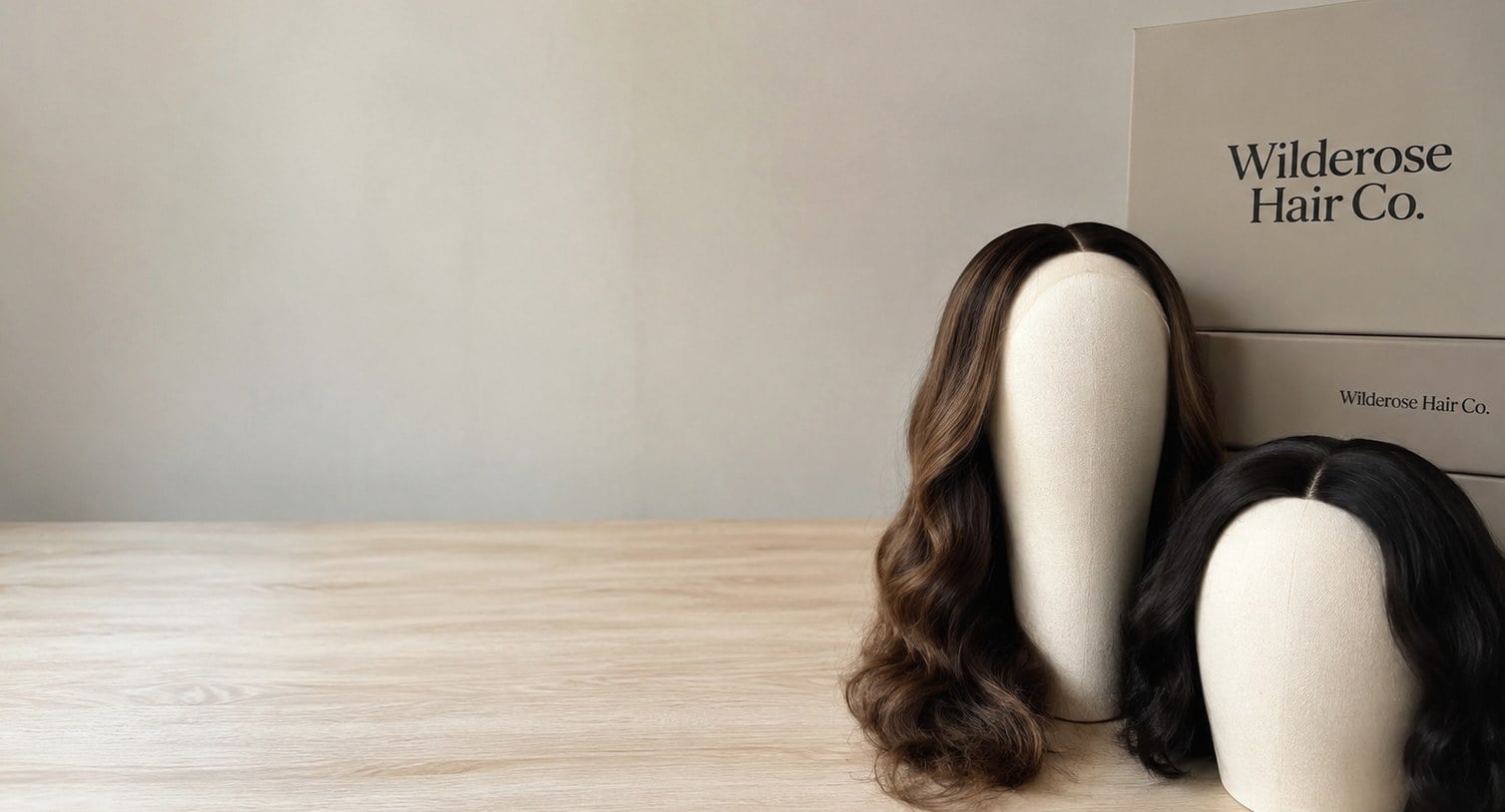
- Send front, side, back and close-up color references
- Describe color by depth, tone and placement, not a trend name
- Free mockup within 24 hours, unlimited free revisions
- Pay nothing until you approve the design
- Minimum order 12 wigs, about 2 weeks after approval
What should you send to get an accurate custom wig mockup?
To get an accurate custom wig mockup, send clear reference photos of the target look, a description of the color in plain words, the cap construction you want, the length and texture, and how many wigs of each look you need. Get Custom Wigs uses that brief to return a free mockup within 24 hours, so the more complete the first message is, the closer the first mockup lands.
For wigs, the reference pack does the job that a logo file does for printed merchandise. A wig has no artwork in the usual sense, but the supplier still needs a visual target: the shade, where the color sits on the head, the shape of the hairline, the part and the overall silhouette. Words alone leave too much room for interpretation, because one buyer’s honey blonde is another buyer’s caramel.
- Look references: photos of the finished style from the front, the side and the back.
- Color references: photos taken in daylight, plus a written description of the shade and any roots, highlights or ombre.
- Construction: lace front, full lace, monofilament top or a wefted cap, and glueless or glue-on.
- Fiber: human hair or heat-friendly synthetic.
- Quantities: how many wigs of each look, in which cap sizes, starting from a minimum of 12.
How do you choose good reference photos for a custom wig order?
Good reference photos for a custom wig order are sharp, evenly lit and show the hair from more than one angle. A single glamour shot rarely gives a wig maker enough to work with, because studio lighting, filters and retouching change both the shade and the apparent density of the hair.
Pick references where the hair is the subject, not the makeup or the outfit. If the look comes from a film, a show or a brand campaign, collect stills from several scenes so the supplier can see how the color reads in different light. For a salon or private-label line, use photos of wigs or hair you already sell and like, so the new stock fits beside it.
- Choose a front view that shows the hairline and the part clearly.
- Add a side view so the length and layering are visible.
- Add a back view to show the nape and how the ends fall.
- Include a close-up of the color at the root and at the ends.
- Label anything you do not want, such as a fringe in the photo that should be left off.
Mark up the photos if that helps. A quick note such as “this length, but straighter” or “this color, but no highlights” saves a revision round later.
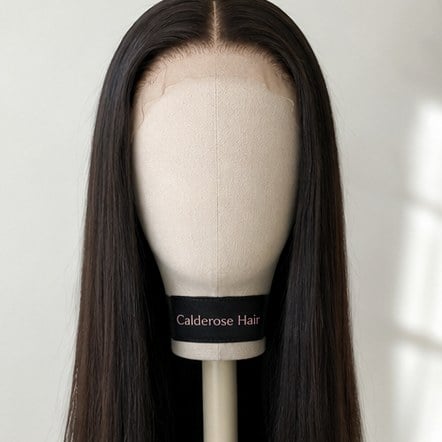
How can you describe wig color so the supplier matches it?
Describe wig color with a reference photo plus plain words for depth, tone and placement: how light or dark the hair is, whether it leans warm, cool or neutral, and where any second color sits. That combination is far more reliable than a single trend name, because color names vary from one brand and one stylist to the next.
Depth covers the scale from black through brown to blonde. Tone covers the undertone, such as golden, ash, copper or neutral. Placement covers roots, face-framing pieces, highlights, balayage and ombre. Fantasy and brand colors work the same way: describe the main shade and say whether it should be solid or blended with a darker root.
| What to describe | Helpful wording | Wording that causes confusion |
|---|---|---|
| Depth | Dark brown, medium blonde, soft black | “Normal brown” |
| Tone | Warm golden, cool ash, neutral beige | “Pretty” or “natural-looking” |
| Placement | Dark root blending into lighter ends, face-framing highlights | “Some highlights” |
| Brand or theme color | A photo of the logo or product beside a hair reference | A color name with no image |
If a whole group must match, say so in the brief. Get Custom Wigs then treats the color as a single target for every wig in the run rather than an approximate range.
Why does wig color look different in photos than in person?
Wig color looks different in photos because cameras, screens and lighting all shift the shade. Warm indoor bulbs push hair toward gold or red, cool daylight and phone filters push it toward ash, and every screen displays color slightly differently. A mockup approved on a phone can therefore read a little lighter or darker once the real wigs arrive.
Human hair and synthetic fiber also handle light in their own ways. Heat-friendly synthetic fiber can carry more shine than human hair, which makes a shade look brighter under strong light. Human hair tends to look softer and more dimensional, especially once it is styled.
- Take your own color references near a window in daylight, without filters.
- Check the mockup on more than one screen if the color is critical.
- Tell the supplier where the wigs will be worn: under stage lights, in a salon, on camera or outdoors.
- Ask for a matte or natural finish if shine would look wrong for the setting.
None of this means the color is guesswork. It means the brief should name the setting, so the shade is chosen for how the wigs will actually be seen.
What details beyond color belong in a wig reference pack?
Beyond color, a wig reference pack should cover the hairline, the part, density, texture, length and cap construction. These details decide whether the finished wigs look like the reference or only share its shade. A good color match on the wrong density or the wrong hairline still reads as a different look.
For the hairline, say whether it should be natural and slightly irregular or crisp and styled, and whether baby hairs are wanted. For the part, choose middle, side or free part. Density describes how full the hair looks, from light and airy to thick and voluminous. Texture runs from straight through wavy and curly to coily. Length is easiest to show in a photo, since inches change with curl.
Construction matters as much as styling. A lace front wig supports a soft, visible hairline, while a glueless or glue-on cap changes how the edge is finished and worn. If you are unsure which construction suits the look, describe how the wearers will use the wigs and let the supplier recommend one in the mockup.
How do you review a custom wig mockup before production?
Review a custom wig mockup by checking it against your reference pack line by line: color depth and tone, color placement, hairline, part, length, texture, density and construction. Get Custom Wigs offers unlimited free revisions, and you pay nothing until you approve the design, so it is worth flagging every difference before you sign off.
Read the written specification as carefully as the image. The image shows the look; the specification confirms the fiber, cap, size breakdown and quantity per look. If a detail matters to you and it is not written down, ask for it to be added.
- Place the mockup beside your best reference photo on the same screen.
- Compare the shade at the root and at the ends separately.
- Confirm the part style and hairline finish.
- Check the size breakdown and quantities for each look.
- Request changes in specific words, such as “slightly cooler tone” or “longer by a few inches”.
- Approve only when every line matches what you need.
Once approved, standard production and delivery take about 2 weeks, with faster turnaround available through express shipping.
What are the most common reference mistakes on a first wig order?
The most common reference mistakes on a first custom wig order are sending one filtered photo, using a color name with no image, mixing several looks in one reference and forgetting to describe the setting. Each one forces a guess, and guesses turn into extra revision rounds.
- Filtered or edited photos: the shade in the photo is not a shade that exists in real hair.
- A trend name only: names like “mushroom brown” mean different things to different people.
- Conflicting references: the color from one photo, the length from another and the texture from a third, with no note saying which is which.
- No size information: a perfect look in the wrong cap size still fails the wearer.
- Skipping the setting: stage, salon shelf, camera and street wear each favor different choices.
- Approving too fast: a quick yes on a phone screen, then surprise at the delivered shade.
A short written brief solves most of these. One paragraph that says what each photo is for, where the wigs will be worn and who will wear them is often enough. If you are new to ordering, the how it works page walks through each step from brief to delivery.
Where can you order custom wigs from a reference photo?
You can order custom wigs from a reference photo through Get Custom Wigs, which builds human hair and heat-friendly synthetic wigs in bulk from a minimum of 12. Send your photos and notes through the custom quote form and a free mockup comes back within 24 hours.
The same reference process works for very different buyers. Salons building a private-label wig line use it to match their existing shades. Costume departments, dance studios and event teams use it to give a whole group one consistent look. Retailers use it to fill a shelf with a set range of colors and lengths. In every case, a clear reference pack is what turns an idea into wigs that match it.
Frequently asked questions
Can I send a celebrity photo as the reference for custom wigs?
Custom wigs can be built from a celebrity or character photo used as a style and color reference. Send several images from different angles and scenes, since one photo can be heavily lit or retouched. Get Custom Wigs uses the references to match the shade, length and silhouette in the mockup, and you can request changes before anything is produced.
How many reference photos should I include for a custom wig quote?
A custom wig quote works best with a small set of photos rather than a single image: a front view for the hairline and part, a side view for length, a back view for the ends and a close-up for color. Add a short note explaining what each photo is meant to show so the supplier does not have to guess.
Can custom wigs be matched to a brand or logo color?
Brand-colored custom wigs are possible when you send a photo or file of the logo alongside a hair reference showing the finish you want. Say whether the color should be solid or blended with a darker root, and whether a matte or shiny finish suits the setting. Get Custom Wigs then shows the proposed shade in the mockup for approval.
Should wig color references be photographed indoors or outdoors?
Wig color references are most reliable when photographed near a window in daylight, without filters or beauty modes. Indoor bulbs tend to warm the shade and phone filters often cool or brighten it. If the wigs will be worn under stage or event lighting, mention that too, so the supplier can choose a shade that reads correctly in that light.
Can one custom wig order use different references for different wearers?
A single custom wig order can include several looks, each with its own reference photos, as long as you list how many wigs belong to each look. Label every reference clearly by look name. Get Custom Wigs builds a mockup for each look, so you can review and approve them side by side before production starts.
What if my reference photo shows hair that is not realistic for a wig?
Wigs can usually get close to an edited or highly styled photo, but some effects come from lighting, retouching or styling products rather than the hair itself. Get Custom Wigs points out anything that will look different in real fiber and suggests the nearest achievable version in the mockup, so you can decide before approving.
Can I mark up a photo to show changes I want on my custom wigs?
Marked-up photos are one of the most useful things to send with a custom wig request. Circle the part, write notes such as longer, straighter or cooler tone, and cross out details you do not want. Clear annotations reduce revision rounds, because the supplier can see exactly which parts of the reference to follow and which to ignore.
How do I describe ombre or root color for a custom wig?
Ombre and rooted custom wigs are easiest to describe by naming the root shade, the end shade and how gradual the blend should be, then adding a photo. Say whether the root should be short and subtle or long and dramatic. Get Custom Wigs reflects the placement in the mockup so you can adjust it before approving production.
Can I approve the wig color and the wig style separately in the mockup?
Wig mockups can be reviewed point by point, so you can accept the color while asking for changes to the length, part or density, or the other way round. Get Custom Wigs offers unlimited free revisions, and you pay nothing until you approve the final design, so there is no pressure to accept a partial match.
What should a salon send to match custom wigs to its current stock?
Salons matching custom wigs to existing stock should send daylight photos of the current wigs or hair they sell, the names they use for each shade and the cap constructions they already carry. Get Custom Wigs uses those references so new private-label wigs sit naturally beside the current range on the shelf.
Do I need to know wig color codes to place a custom order?
Custom wigs can be ordered without knowing any industry color codes. A clear photo and a plain description of depth, tone and placement are enough for the supplier to propose a shade. If you already use codes from another brand, include them as a hint, but always pair them with an image, since codes are not consistent across makers.
Get a free mockup for your wigs
Send your logo or idea and the quantity you have in mind. Get Custom Wigs returns a free mockup within 24 hours, you approve the design before anything is produced, and standard turnaround is about two weeks with faster options available. Get a custom quote.